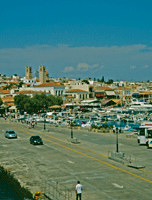
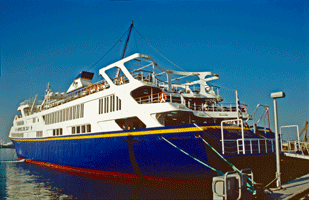
Take a day cruise from Athens to the fabulous Greek islands of Hydra, Poros and Aegina for a relaxing day on the sea. With all your transport, transfers and buffet lunch organized, you can sit back and enjoy your leisurely day cruise with free time on each island to explore. After transferring from Athens to the port by motor coach, you’ll set sail for the island of Poros, where you’ll have free time for strolling and shopping.
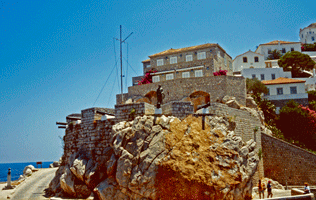
Next, it's on to the island of Hydra. You will have plenty of time at leisure to enjoy the unique charms of Hydra island, whose amphitheater shape once served as a safe shelter for Saronic Pirates. From the decks, you will be able to admire the very special architecture and dramatic landscapes of this island, whose old traditional stone houses and mansions silently stand witness to a long and turbulent history.
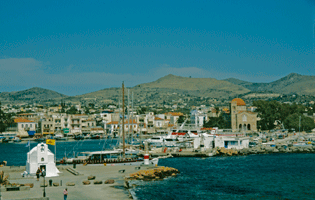
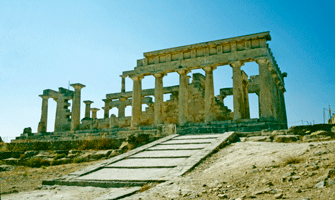
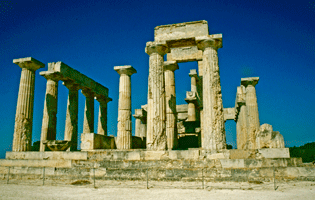
Upon arrival in Egina (Aegina) you can either join an excursion to the Temple of Aphaia (cost not included) or take a walk around the main town. Aegina is one of the Saronic islands of Greece in the Saronic Gulf. The lovely island is only 31 miles (50 kilometers) from Athens, and is a popular getaway for Athenians during the summer months.
After sailing back to the port you'll be transferred to Athens.
We did this in June 2004
HOVER over image for title. Click here to return to Greece Main Page.
Poros is a small Greek island-pair in the southern part of the Saronic Gulf, about 58 km (36 miles; 31 nautical miles) south of the port of Piraeus and separated from the Peloponnese by a 200 m (656 ft) wide sea channel, with the town of Galatas on the mainland across the strait. Its surface area is about 31 square kilometres (12 sq mi) and it has 3,261 inhabitants (2021). The ancient name of Poros was Pogon. Like other ports in the Saronic, it is a popular weekend destination for Athenian travellers.
Poros consists of two islands: Sphaeria, the southern part, which is of volcanic origin, where today's city is located, and Kalaureia (Greek: Καλαυρία, [kalavˈria]), also Kalavria or Calauria (meaning 'gentle breeze'), the northern and largest part. A bridge connects the two islands over a narrow strait.
Poros is an island with rich vegetation. Much of the northern and far eastern/western sides of the island are bushy, whereas large areas of old pine forest are found in the south and center of the island. It has a good road network and adequate tourist infrastructure, which makes it a popular resort for short holidays.
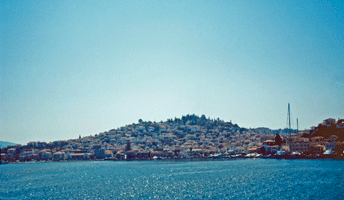
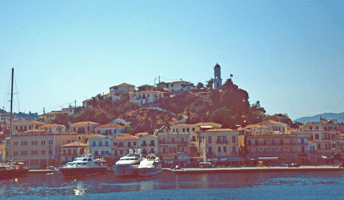
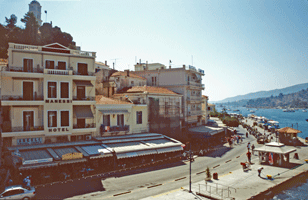
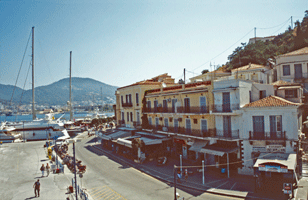
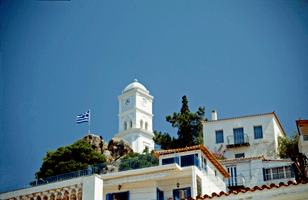
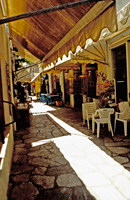
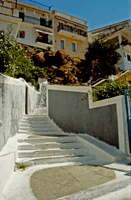
Hydra,is one of the Saronic Islands of Greece, located in the Aegean Sea between the Myrtoan Sea and the Argolic Gulf. It is separated from the Peloponnese by a narrow strip of water. In ancient times, the island was known as Hydrea (Ὑδρέα, derived from the Greek word for "water"), a reference to the natural springs on the island
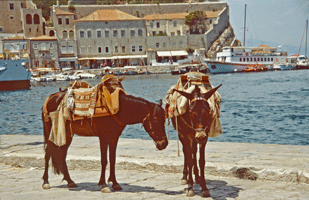
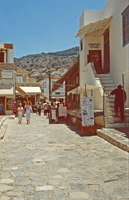
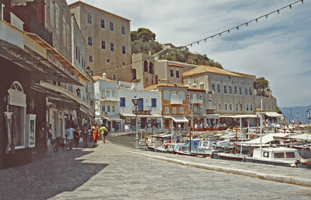
There is one main town, known simply as "Hydra port" (population 1,900 as of 2011). It consists of a crescent-shaped harbor, around which is centered a strand of restaurants, shops, markets, and galleries that cater to tourists and to locals (Hydriots or Hydriotes). Steep stone streets lead up and outward from the harbor area. Most of the local residences, as well as the hostelries on the island, are located on these streets. Other small villages or hamlets on the island include Mandraki, Kamini, Vlychos, Palamidas, Episkopi, and Molos. Wheeled vehicles are not permitted on the island, including but not limited to cars, motorcycles, scooters, bicycles, and e-bikes.
We visited here in June 2004.
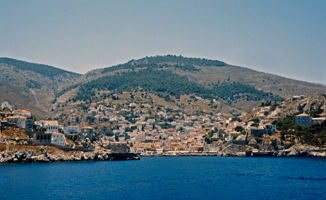
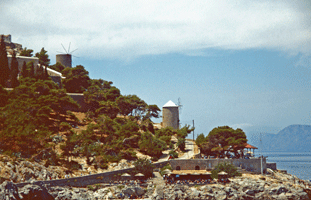
Aegina is one of the Saronic Islands of Greece in the Saronic Gulf, 27 km (17 mi) from Athens. Tradition derives the name from Aegina, the mother of the mythological hero Aeacus, who was born on the island and became its king.[In classical antiquity Aegina was a powerful city-state and at one point a rival of Athens. In modern times Aegina is known for the temple of Aphaia, pistacho production, and the pilgrimage site of St. Nektarios. Many Athenians have established vacation homes in Aegina.
Landmarks
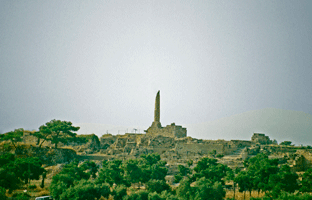
Temple of Aphaea, dating from about 490 BC, it is the oldest surviving temple in Greece.[46] It was dedicated to its namesake, a goddess who was later associated with Athena; the temple was part of an equilateral holy triangle of temples including the Athenian Parthenon and the temple of Poseidon at Sounion.
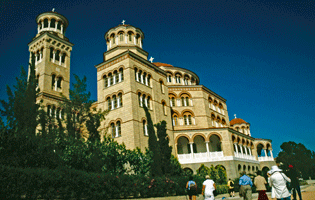
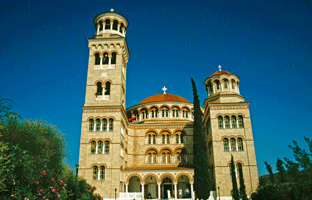
Monastery of Agios Nectarios, dedicated to Nectarios of Aegina, a recent saint of the Greek Orthodox Church.
Temple of Zeus Hellanios, near the village of Pachia Rachi, is a 13th-century Byzantine church, built on the ruins of the ancient temple to Zeus Hellanios, built in the 4th century BC. The staircase leading up to the church, some of the original walls, and loose stones from the earlier temple remain..
We visited here in June 2004.