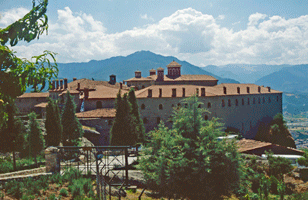
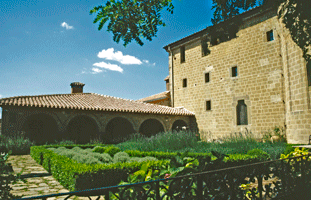
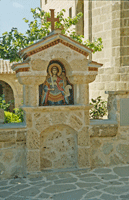
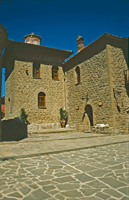
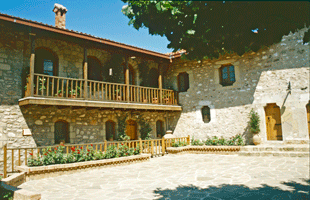
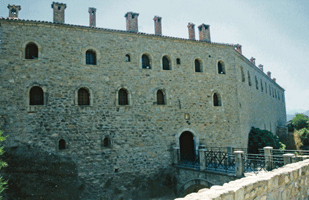
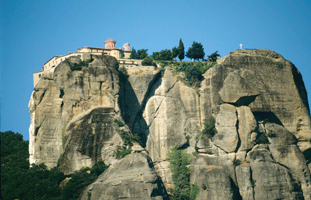
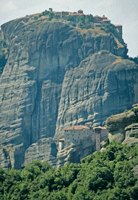
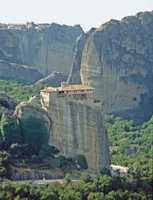
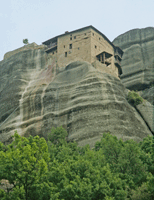
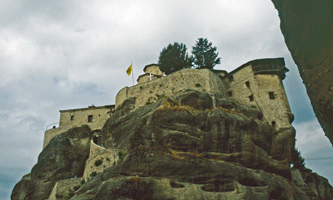
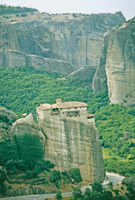
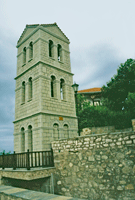
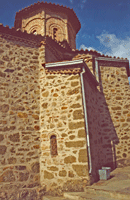
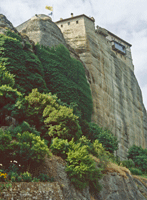
The Meteora is a rock formation in the regional unit of Trikala, in Thessaly, in northwestern Greece, hosting one of the most prominent complexes of Eastern Orthodox monasteries, viewed locally as second in importance only to Mount Athos. Their height is more than 20m.
Twenty-four monasteries were established atop the giant natural pillars and hill-like rounded boulders that dominate the local area, mainly from the second half of the 14th century under the local rule of Simeon Uroš. Six of these are still active and open to visitors: the monasteries of Great Meteoron (est. 1356), Varlaam, Saint Nicholas Anapausas, Rousanou, Holy Trinity, and Saint Stephen. The latter became a community of nuns in 1961, whereas the former five remain managed by monks.
Meteora is located in between the town of Kalabaka and the village of Kastraki at the northwestern edge of the Plain of Thessaly near the Pineios river and Pindus Mountains. The Meteora complex was added to the UNESCO World Heritage List in 1988 because of its outstanding architecture and beauty, combined with religious and cultural significance.
We visited here in June 2004.
HOVER over image for title. Click here to return to Greece Main Page.